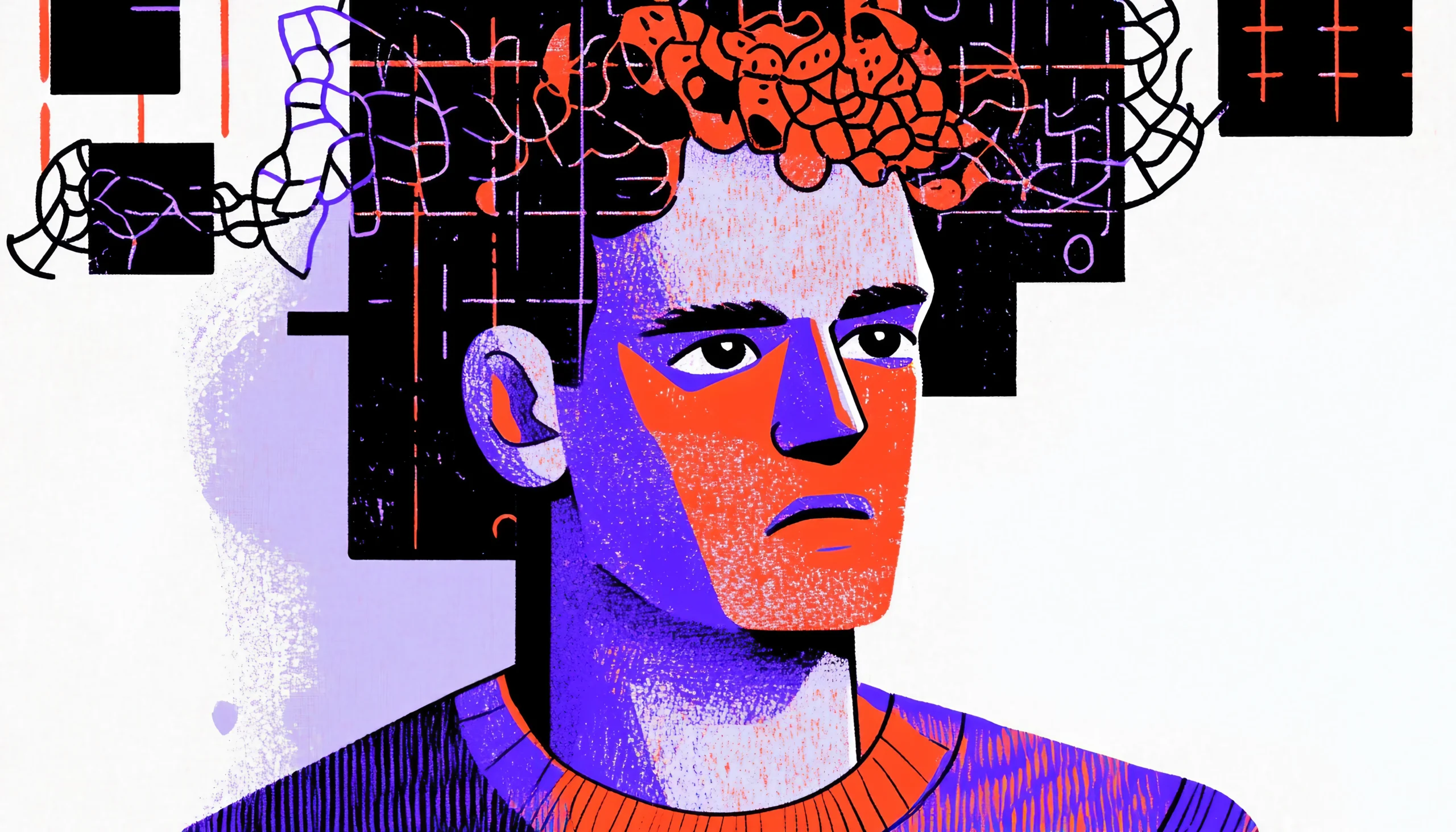








Picture this: a patient leaves their doctor’s office with a new prescription, full intentions to start exercising, and a printed diet plan tucked under their arm. Three weeks later, the prescription bottle is still sealed, the gym shoes haven’t moved from the closet, and the diet plan is buried under takeout menus. This scenario is what poor behavioral design looks like in healthcare, and it plays out millions of times every day across the world.
Here’s a number that should make you pause: according to the World Health Organization, non-adherence to long-term therapies hovers around 50% in developed countries. Half. We’re building increasingly sophisticated medical systems, training brilliant clinicians, and spending trillions on healthcare infrastructure, yet half of patients simply do not follow through. That’s not a medical problem. That’s a design problem.
The field of behavioral economics has been quietly revolutionizing how we think about human decision-making for decades. From Richard Thaler and Cass Sunstein’s landmark work in Nudge to Daniel Kahneman’s exploration of cognitive biases in Thinking, Fast and Slow, we’ve accumulated a rich body of knowledge about why people make the choices they do and, more importantly, how environments can be designed to guide people toward better ones. The healthcare industry is finally starting to pay attention.
This article is about what happens when UX designers, product managers, and healthcare professionals stop treating patients like rational actors and start designing for the messy, emotional, distracted, and beautifully human beings they actually are. The results are truly remarkable.
The Psychology Behind Behavioral Design: Why Rational Design Fails Patients
The Two-System Brain Your Healthcare App Is Ignoring
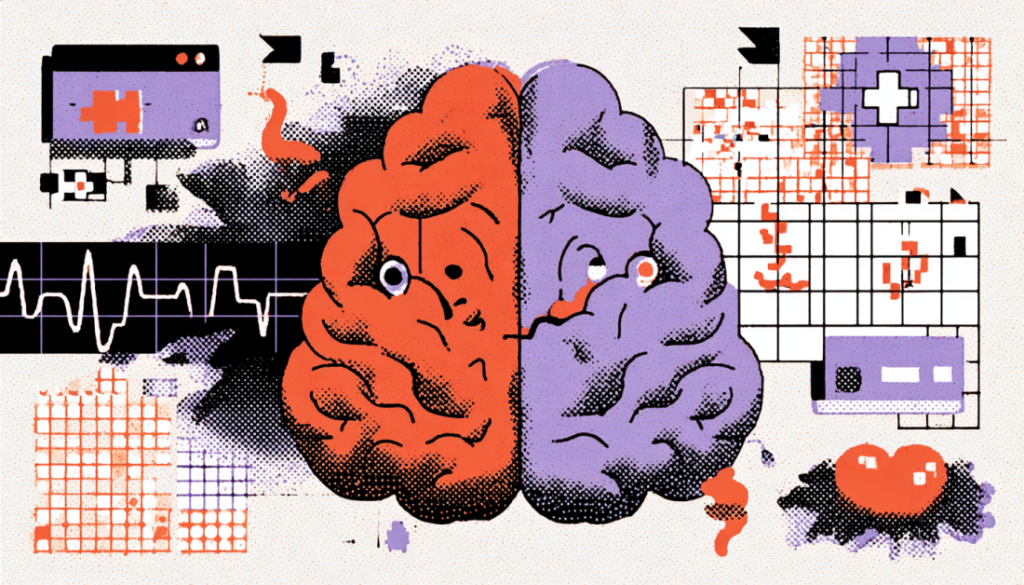
Before we talk design solutions, we need to talk about how the human brain actually works, because most healthcare digital products are designed for a brain that doesn’t exist. They’re designed for System 2 thinkers: deliberate, logical, fully motivated humans who read every label, calculate every calorie, and make decisions like spreadsheet formulas. The reality is that most of our daily behavior is driven by System 1, automatic, emotional, fast, and deeply influenced by context.
Kahneman’s dual-process theory isn’t just an academic curiosity. It’s a direct indictment of how we’ve been designing healthcare experiences. Burying a medication reminder in a settings menu, requiring five taps to log blood sugar, or presenting lifestyle tips in 10-point clinical text demands System 2 engagement from people who are tired, stressed, in pain, or distracted by life. That’s a design failure, not a patient failure.
Think about how Amazon has mastered System 1 design. One-click purchasing, personalized recommendations, frictionless checkout — every touchpoint is engineered to reduce cognitive load and make the desired behavior feel effortless. Now compare that to the average patient portal experience: login screens that time out in 90 seconds, lab results buried behind three dropdown menus, and appointment booking flows that feel like filing your taxes. We can do so much better. And the stakes are infinitely higher than buying another pair of headphones.
Default Effects: A Core Principle of Behavioral Design
One of the most powerful and underused tools in behavioral design is the default setting. Research consistently shows that people overwhelmingly stick with whatever option is pre-selected for them, whether it’s organ donation rates (as dramatically illustrated by studies comparing opt-in vs. opt-out countries), retirement savings contributions, or email newsletter preferences. This isn’t laziness. It’s cognitive efficiency. Your brain interprets the default as the recommended choice, the normal thing to do, the path of least resistance.
In healthcare digital products, defaults are a goldmine of untapped behavioral influence. Imagine a diabetes management app that defaults to daily check-in reminders rather than making users dig through settings to activate them. Or a telehealth platform that automatically schedules a 30-day follow-up appointment unless the patient explicitly opts out. Or a digital pharmacy that defaults to 90-day prescription fills instead of 30-day, reducing the number of moments where a patient might let their medication lapse. Each of these is a nudge built into the architecture of the experience.
The NHS has experimented with appointment reminder systems that use this principle beautifully. Rather than sending a generic “You have an appointment” text, they redesigned messages to include social proof: “9 out of 10 patients attend their appointments at this clinic.” They also added a commitment device, asking patients to reply “YES” to confirm. DNA (Did Not Attend) rates dropped significantly. The medical content didn’t change. The design did.
Friction as Medicine: When Removing Barriers Saves Lives

Mapping the Friction Points in Patient Journeys
Friction is the invisible tax on behavior. Every extra step, every confusing label, and every moment of uncertainty adds weight to the mental load a patient carries, and at some point, that load becomes heavy enough that they just stop. They abandon the app, stop refilling prescriptions, and skip follow-up appointments. The behavior that would have benefited their health simply evaporates, not because they didn’t want to be healthier, but because the path there was too exhausting.
BJ Fogg’s Behavior Model gives us a precise framework for understanding this: behavior happens when motivation, ability, and a prompt converge at the same moment. Healthcare designers tend to obsess over motivation, health education campaigns, scary statistics, and inspirational stories while doing almost nothing to increase ability, which is really about reducing friction. When ability is low, behavior requires almost superhuman motivation. But when friction drops, even moderately motivated people follow through.
Consider medication adherence apps. First-generation solutions focused heavily on motivation: educational content about why your medication matters, alarming statistics about what happens if you skip doses. They got modest results. Then designers started asking a different question: what makes it hard to take medication consistently? The answers were illuminating. Forgetting was a factor, but so was the complexity of multi-drug regimens, the cognitive burden of tracking, and the perceived effort of logging. Apps like Medisafe were redesigned around these friction points, adding pill identification, caregiver notifications, and one-tap logging, and saw dramatically higher engagement as a result.
Smart Simplification: The Art of the Right Moment, Right Message
Timing matters enormously in behavioral design. A push notification reminding you to exercise that arrives at 2pm on a Tuesday when you’re in back-to-back meetings is worse than no reminder at all; it trains you to dismiss health prompts reflexively. But a notification at 6:30am on a Saturday, when you’ve historically been active according to your phone’s motion data? That’s a nudge that has a real chance of working.
This is where the intersection of UX design and machine learning becomes genuinely exciting for healthcare. Apps like Noom have built their entire behavioral change model around contextually intelligent prompting. Rather than flooding users with information, they drip it strategically, sending psychology-based lessons at the moments of highest receptivity, asking check-in questions when users are in reflective states, and timing food logging reminders around historical meal patterns. The content isn’t revolutionary. The delivery mechanism is.
There’s also something powerful about progressive disclosure in health interfaces. When a patient is first diagnosed with Type 2 diabetes, handing them a 40-page management booklet is the design equivalent of putting them in a difficult situation. Digital health products can instead reveal complexity gradually, starting with the single most important behavior change, building competence and confidence, then layering in additional guidance as the user’s capability grows. It respects where patients actually are, rather than where we wish they were.
Social Proof in Behavioral Design: The Power of “People Like You”
Designing for Social Identity, Not Just Individual Behavior
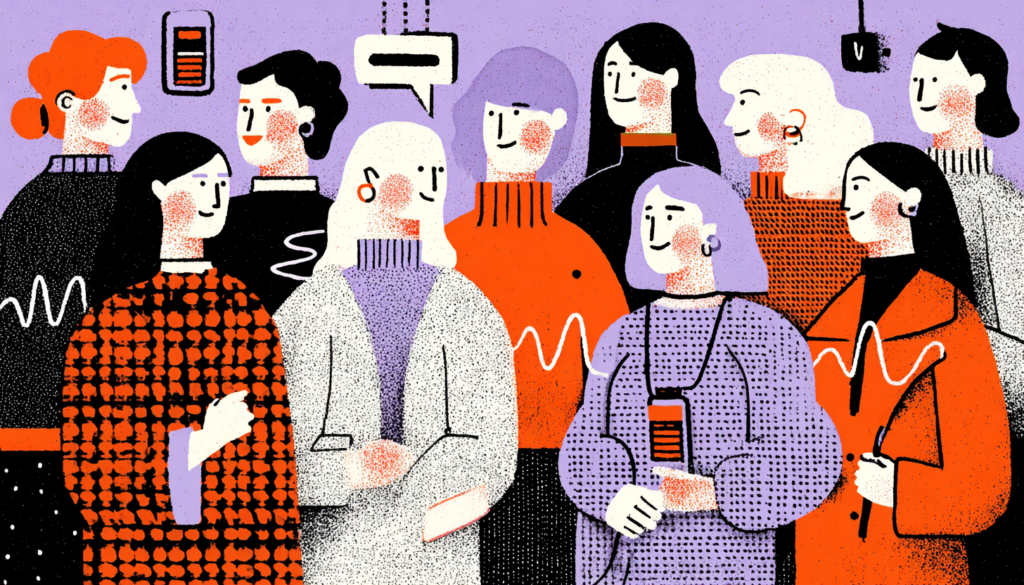
Humans are deeply social creatures. Our sense of self is fundamentally tied to the groups we belong to, and our behavior is heavily influenced by what we believe members of those groups do. This is Robert Cialdini’s social proof principle operating at the identity level, and it’s one of the most powerful levers in behavioral design. The question isn’t just, “What do most people do?” but more specifically, “what do people like me do?”
The healthcare implications here are significant. A 2016 study published in the Journal of the American Medical Association found that patients were more likely to follow preventive care recommendations when they were told that a high percentage of their demographic peers had already done so. This effect was stronger than either financial incentives or simple reminders. Belonging is a more powerful motivator than fear or reward, at least for sustained behavior change.
Digital health products can operationalize this concept beautifully. Strava, technically a fitness app, has built an entire behavioral ecosystem around social identity, the “segment” leaderboards, the Kudos system, and the shared routes. Users don’t just track workouts; they perform them for a community of peers. The data becomes social currency. When Apple Watch introduced Activity Sharing and Competitions, they were tapping into exactly this dynamic: you’re not just closing your rings for yourself; you’re closing them in front of people whose opinion matters to you. That shifts the entire motivational calculus.
Building Streaks, Progress, and the Psychology of Commitment
Commitment devices are one of behavioral economics’ most fascinating tools, and they work by leveraging a very human quirk: we hate losing something we already have. This is Kahneman’s loss aversion playing out in the design layer. Once you’ve built a 47-day medication adherence streak in an app, missing a day feels like a genuine loss. That feeling, engineered by design, can be more motivating than any health education campaign.
Duolingo has probably done more for the psychology of streaks than any other app on the planet. Love it or hate it, their streak mechanic has kept hundreds of millions of people coming back to the app daily. Healthcare designers are borrowing from this playbook. Apps like MyFitnessPal use logging streaks to maintain engagement. Headspace builds meditation habit formation around gentle streak mechanics. The key design insight is that the streak needs to feel achievable from day one; a 1-day streak is still a streak, and the psychology of “I’ve already started” is an incredibly powerful behavioral anchor.
There’s an important ethical caveat to introduce here: commitment devices and streak mechanics need to be designed with patient well-being at the center, not engagement metrics. A healthcare app that makes patients feel catastrophically guilty for missing a day during a hospital stay, a mental health crisis, or even just a hectic week is causing harm. The best behavioral design in healthcare builds in grace periods, celebrates restarts, and separates self-worth from performance metrics. Resilience, not perfectionism, is the behavioral goal.
Ethical Behavioral Design: Designing for Agency, Not Manipulation
Where Behavioral Design Ends and Manipulation Begins
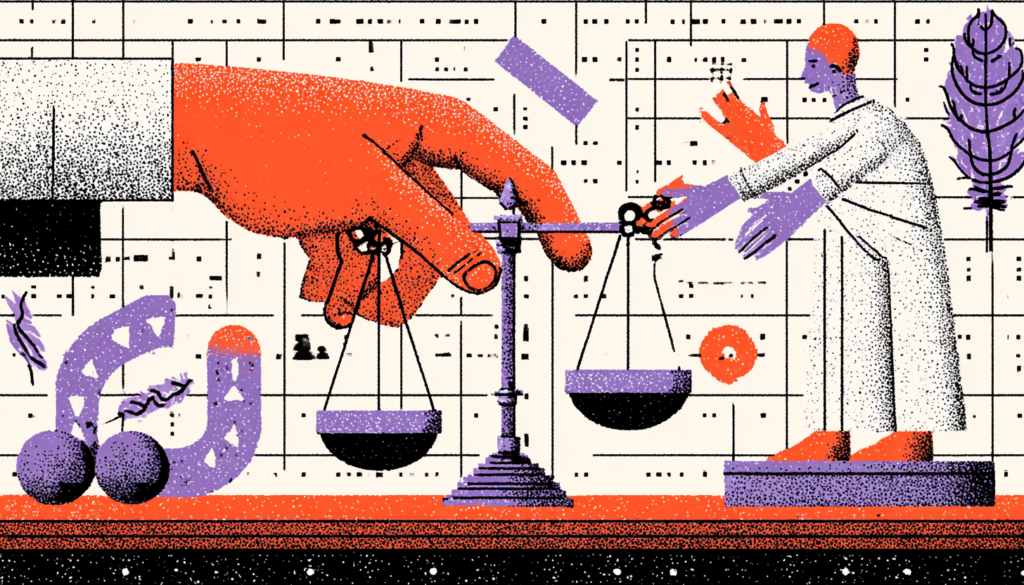
Here’s the uncomfortable conversation that behavioral designers in healthcare need to have more openly: not all nudges are equally effective, and the line between helpful design and manipulative design can be blurry. We’re dealing with people in vulnerable states, managing chronic illnesses, facing frightening diagnoses, and navigating mental health challenges, and we have enormous design power over their behavior. That’s a responsibility that deserves explicit, ongoing ethical scrutiny.
Thaler and Sunstein’s original definition of libertarian paternalism, the philosophical backbone of nudge theory, rests on a key principle: nudges should be transparent and non-coercive, preserving the freedom to choose otherwise. A nudge that defaults patients to a treatment plan they haven’t fully understood violates this principle. A gamification mechanic that exploits loss aversion to drive engagement metrics at the expense of patient rest and recovery violates it too. Dark patterns don’t become acceptable just because the app is a health app.
Recognizing Dark Patterns in Behavioral Design
The dark pattern problem in healthcare is real and growing. Subscription-based wellness apps make cancellation deliberately complex. Symptom checkers amplify health anxiety to drive premium upgrades. Notification systems optimize for daily active user counts, not health outcomes. These designs exploit the same behavioral vulnerabilities that good nudge design aims to support, but for commercial gain rather than patient benefit. UX designers in this space carry a specific responsibility to push back on these dark patterns, loudly and repeatedly.
Behavioral Design for Informed Autonomy and Long-Term Trust
The most sustainable behavioral design in healthcare isn’t the kind that tricks people into healthy behavior; it’s the kind that helps people understand their patterns well enough to make genuinely informed choices. This is what the best digital health products aspire to: not compliance, but capability. Not adherence, but self-determination.
Apps like Oura Ring and Whoop do something genuinely compelling in this regard. These apps don’t just tell you what to do. Instead, they show you your own data, your sleep patterns, your recovery scores, and your heart rate variability, and trust you to make connections. When your graph shows how a late glass of wine tanked your deep sleep, that insight no external nudge could have generated becomes undeniable. You’re not being pushed toward better choices. You’re being equipped to recognize them yourself.
Transparency in Design: Building Patient Agency
Transparency in algorithmic recommendations is another piece of this puzzle. When a health app recommends a specific behavior, patients deserve to understand why. Not in technical detail necessarily, but in enough plain language to feel like they’re in dialogue with the system rather than being managed by it. “Based on your activity patterns this week, rest today” is a nudge.” “Based on your activity patterns this week, rest today; tap to see why” is a nudge that respects your agency. One sentence. Completely different relationship.
Building long-term trust is ultimately what separates behavioral design that transforms health outcomes from behavioral design that just gooses short-term engagement numbers. Patients who trust a health platform stay with it, share honest data with it, and integrate it genuinely into their lives. Patients extend that trust through consistent, transparent design with a visible commitment to their actual well-being, not their screen time. When you design with that north star, the nudges stop feeling manipulative and start feeling like a good friend who happens to know an awful lot about behavior change.
The future of healthcare isn’t just about better drugs, faster diagnostics, or more sophisticated surgical techniques; it’s about the invisible architecture of choice that surrounds every patient, every day. Behavioral design gives us the tools to build that architecture thoughtfully, to reduce the friction between intention and action, and to harness the social and psychological forces that actually drive human behavior. When we stop designing for the idealized rational patient and start designing for the real, distracted, emotional, remarkably human patient who actually exists, we unlock a lever for improving health outcomes that no pharmaceutical breakthrough can match. The prescription is already written. It just needs a better design to be filled.