





Picture this: a 58-year-old man named David has just left his cardiologist’s office with a prescription for three new medications. He’s a bit overwhelmed, maybe a little scared, but determined. He fills the prescriptions that afternoon. By the end of week two, he’s already missed several doses. Three months in, he’s taking his medications less than half the time. By year one, two of the three bottles are sitting untouched in the back of a cabinet. This is a persuasive design problem, and it has a solution.
This isn’t a story about irresponsibility. It’s a story about a broken system. The World Health Organization estimates that only 50% of patients with chronic diseases in developed countries adhere to their prescribed treatment regimens. In developing nations, that number is even more sobering. We have drugs that work. We have doctors who care. Yet somewhere between the prescription pad and the patient’s mouth, the whole system falls apart, and it costs an estimated $300 billion annually in the United States alone in avoidable healthcare costs.
Here’s what’s fascinating, though. We already have the behavioral science tools to fix this problem. The same psychological principles that keep you scrolling Instagram at midnight, that nudge you to add one more item to your Amazon cart, or that convince you to upgrade your Spotify account—those exact mechanisms can be redesigned and redirected toward something genuinely life-saving. Persuasive design, when applied thoughtfully to digital health products, has measurable potential to change patient behavior at scale.
This article is about how that actually works. Not in theory, not in abstract UX-speak, but in the practical, sometimes uncomfortable, always fascinating reality of designing for human behavior in a healthcare context.
Understanding Persuasive Design in a Healthcare Context
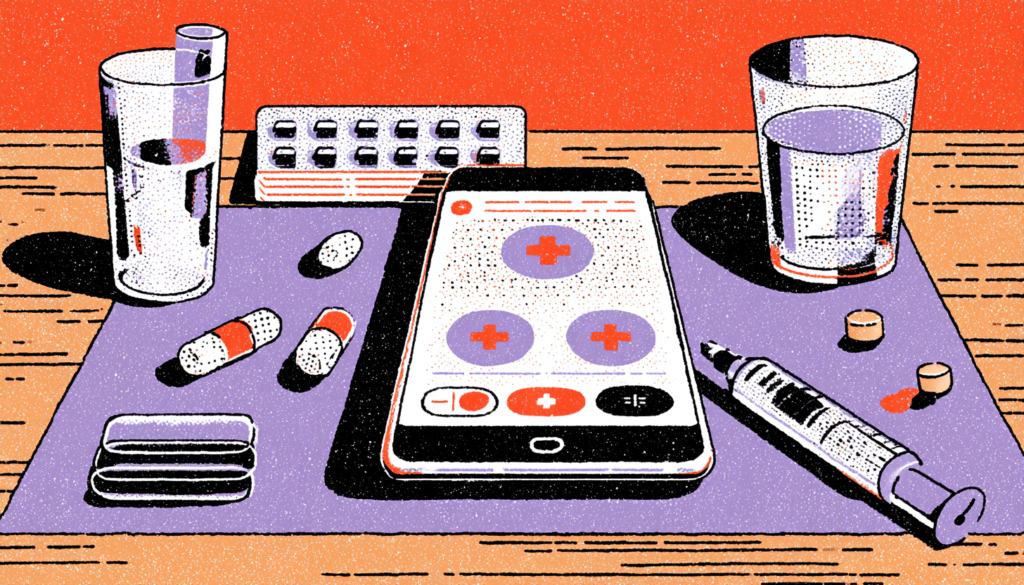
Why Behavioral Science Belongs in the Medicine Cabinet
Persuasive design is not manipulation. Let’s get that out of the way immediately, because in healthcare it’s the first objection you’ll encounter, from ethicists, from clinicians, and sometimes from patients themselves. B.J. Fogg, the Stanford researcher who essentially codified the field, defines persuasive technology as “any interactive computing system designed to change people’s attitudes or behaviors.” The key word there isn’t “change.” It’s “designed.” Persuasive design is the intentional, thoughtful architecture of the user’s decision-making environment.
In healthcare, this issue matters enormously because medication non-adherence is almost never a values problem. Patients generally want to get better. They don’t skip their statins because they enjoy cardiovascular risk. They skip them because human beings are spectacularly terrible at maintaining consistent behavior over time, especially for conditions with no immediate, felt symptoms. You don’t feel your blood pressure rising. You don’t sense your blood sugar spiking. There’s no visceral feedback loop to reinforce the behavior, so the behavior decays. This is where design comes in to provide the missing feedback.
Think of it this way: a smoke detector doesn’t lecture you about fire safety. It doesn’t require you to understand the chemistry of combustion. It simply makes the consequence of inaction impossible to ignore, right now, in this moment. Good persuasive design in medication adherence works similarly. It creates immediacy, relevance, and emotional salience around a behavior that the patient already, at some level, wants to perform. You’re not tricking anyone. You’re building a better bridge between intention and action.
The Fogg Behavior Model and Medication Reminders

Motivation, Ability, and the Perfect Prompt
B.J. Fogg’s Behavior Model is arguably the most useful framework you can apply to medication adherence design, so let’s break it down in real terms. The model says that for a behavior to occur, three things must converge simultaneously: the person must be sufficiently motivated, they must have the ability to perform the behavior, and there must be a prompt that triggers the action at exactly the right moment. Miss any one of these three, and the behavior doesn’t happen. It sounds simple. In practice, most medication apps violate all three principles simultaneously.
Take motivation. The classic reminder app approach is to send a generic push notification, “Time to take your medication!” at a fixed time every day. This is motivationally inert. It doesn’t connect the pill to the outcome the patient actually cares about. Compare that to what Medisafe, one of the more behaviorally sophisticated medication management apps, does: it shows patients their “drug interaction checker” results, celebrates streaks, and sends refill reminders calibrated to their specific pharmacy wait times. It makes the medication meaningful by tying it to the patient’s personal health narrative. That’s motivation done right.
Ability is the dimension that healthcare app designers most frequently underestimate. Ability isn’t just about whether the patient is physically capable of taking the pill; it’s about whether the behavior feels easy enough in that specific moment. A 70-year-old arthritis patient who has to navigate three app screens and authenticate with a PIN to log their medication dose will, predictably, stop logging. Every additional tap is a potential dropout point. The best-designed apps reduce confirmation to a single gesture, integrate with smart pill dispensers, or use voice input, because when ability is high, even modest motivation is sufficient to trigger the behavior. Design for your lowest-energy user moment, not your highest.
Gamification, Streaks, and the Psychology of Commitment
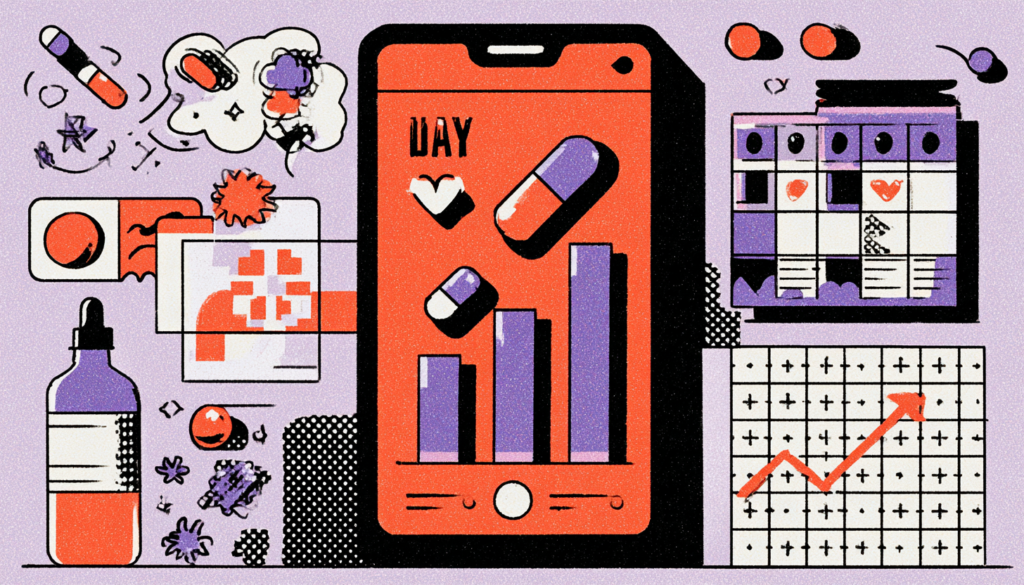
Why Your Brain Treats a Pill Streak Like a High Score
Here’s a behavioral quirk that game designers discovered decades before healthcare caught on: humans are extraordinarily loss-averse. Daniel Kahneman’s research, which earned him a Nobel Prize, established that losing something hurts roughly twice as much as gaining the equivalent thing feels good. Duolingo built an entire empire on this insight with its streak mechanic. Users don’t just practice their Spanish to gain something; they practice because the thought of breaking their streak is genuinely painful. The same neurological wiring is available to medication adherence designers, and it’s wildly underused.
Apps like Habitica take the concept further, turning health behaviors into a full RPG experience where your character literally takes damage when you miss a medication dose. That might sound absurd, but there’s genuine research backing it up. A study published in JAMA Internal Medicine found that gamification interventions increased physical activity in patients by 35 to 45 percent compared to control groups. The underlying mechanism is identity-based motivation: once a patient starts thinking of themselves as “someone with a 30-day streak,” missing a dose isn’t just a behavioral lapse; it’s an identity threat. That’s a fundamentally different motivational architecture than a guilt-free push notification.
But gamification in healthcare comes with real design responsibilities that you can’t ignore. The line between healthy motivation and anxiety-inducing pressure is thin, especially for patients managing chronic illness, mental health conditions, or the cognitive load of complex polypharmacy regimens. The best designs build in “grace periods,” allow streak freezes for hospitalizations or disruptions, and frame failure as a recoverable setback rather than a catastrophic loss. Noom, the weight management app, explicitly uses compassionate language when users miss a goal and reports higher long-term retention as a result. The lesson: design the recovery experience as carefully as you design the success experience.
Social Proof, Accountability Partners, and Community-Driven Adherence
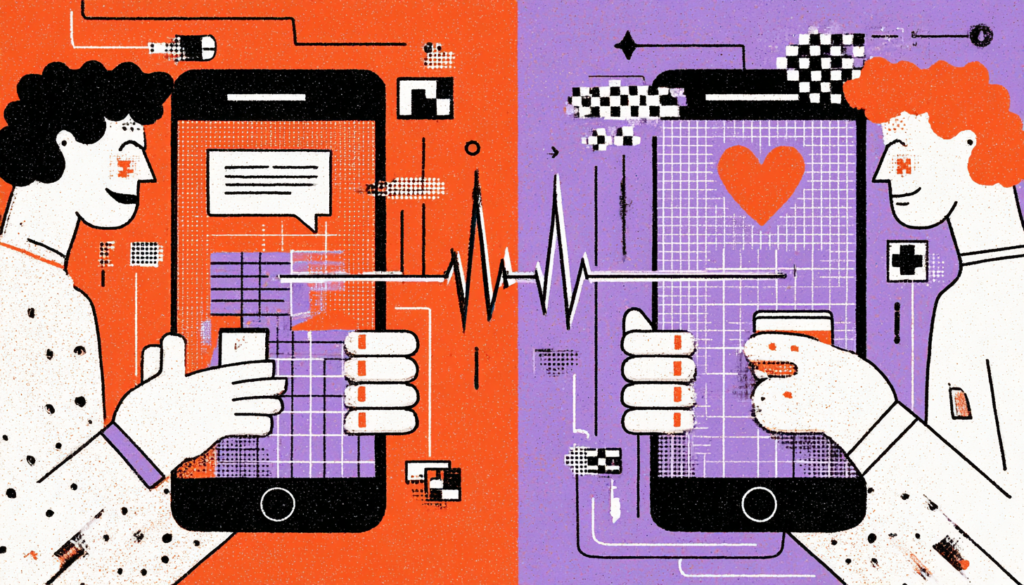
The Surprising Power of Being Watched (With Consent)
There’s a reason people perform better in gyms than in their living rooms. Social observation changes behavior, not because we’re shallow, but because accountability is one of the oldest evolutionary motivators humans have. We are wired to care what our tribe thinks. Medication adherence design can tap into these principles with what researchers call “social proof” and “accountability partner” mechanics, both of which have compelling evidence bases in digital health.
Medisafe’s “Medfriend” feature allows patients to designate a trusted person, a family member, caregiver, or friend, who receives a notification if a dose is missed. The patient knows this person will be notified. That knowledge alone, independent of whether the med friend ever acts on it, significantly improves adherence rates according to Medisafe’s own published data. This is the Hawthorne Effect in digital form: behavior changes when people know or believe they’re being observed. You don’t need surveillance. You need the feeling of gentle social accountability, designed with full transparency and patient consent.
Community features take these concepts further. Platforms like PatientsLikeMe (before its restructuring) and condition-specific forums within apps like MyTherapy create a sense of shared identity among patients managing similar conditions. When you see that other people with your diagnosis are maintaining their adherence and reporting better outcomes, you experience what Cialdini called “social proof,” the cognitive shortcut that says, “If people like me are doing the same, it must be the right thing to do.” This isn’t passive observation. It actively recalibrates the patient’s sense of what’s normal and achievable. Designing visible community norms into a medication app can shift the cultural baseline of the entire user population.
Personalization, Timing, and the Context-Aware Reminder
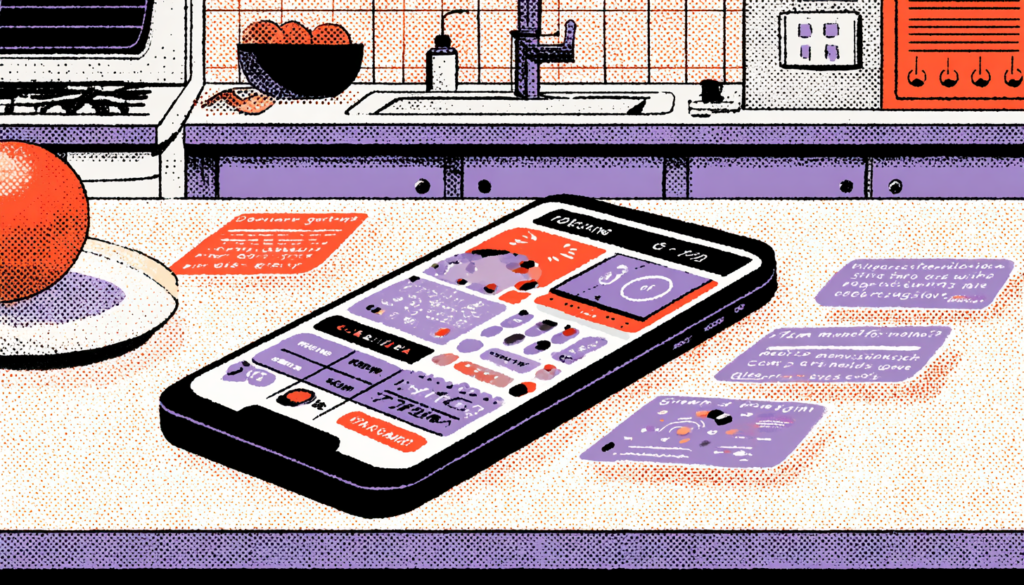
The Right Message, to the Right Person, at the Exactly Right Moment
Generic reminders don’t work. We’ve established that. But what does “personalized” actually mean in practice, beyond just slapping the user’s name on a push notification? Real personalization in medication adherence design means understanding the patient’s behavioral context, their daily routine, their motivational triggers, their specific barriers, and adapting the intervention dynamically. This is where modern machine learning and behavioral data intersect with UX in genuinely exciting ways.
Consider what a truly context-aware system could look like. Apple’s HealthKit and Google Fit already collect data about sleep patterns, activity levels, and location. A medication app integrated with these data streams could learn that a specific patient almost always takes their evening medication when they’re home by 7pm but consistently misses it on days they work late. The system could automatically shift the reminder to 9pm on those days or pair it with a behavioral anchor, “Hey, you just got home. Don’t forget your evening dose,” tied to geofencing. This isn’t science fiction. The technology exists. The barrier is mostly organizational and regulatory, not technical.
Implementation Intentions and Habit Anchoring
Timing research in behavioral science also points to something called “implementation intentions,” a technique developed by Peter Gollwitzer at NYU, where people who specify not just what they’ll do but when, where, and how they’ll do it show dramatically higher follow-through rates. An adherence app that guides a newly diagnosed patient through the explicit process of anchoring their medication routine to an existing daily habit, morning coffee, brushing teeth, or a specific TV show is using implementation intention design. Mango Health, an early medication adherence app, used exactly this mechanic and demonstrated 84% of users taking their medications on time and within the correct window, compared to national averages hovering around 50%. The data speaks for itself.
Medication non-adherence is one of the most expensive, most preventable, and most overlooked public health crises of our time. And while the problem is complex, touching on health literacy, socioeconomic factors, side effect profiles, and patient-provider trust, a significant portion of the solution lives squarely in the domain of design. Persuasive design, applied with rigor, empathy, and a genuine commitment to patient autonomy, can close the gap between what patients intend to do and what they actually do.
The tools are in our hands: behavioral models, gamification mechanics, social accountability features, and context-aware personalization. What we need now is the collective will among product teams, health systems, and designers to use them, not to manipulate patients into compliance but to build the invisible support structures that make the right behavior the easy behavior. David, and the hundreds of millions of patients like him, deserve nothing less.