







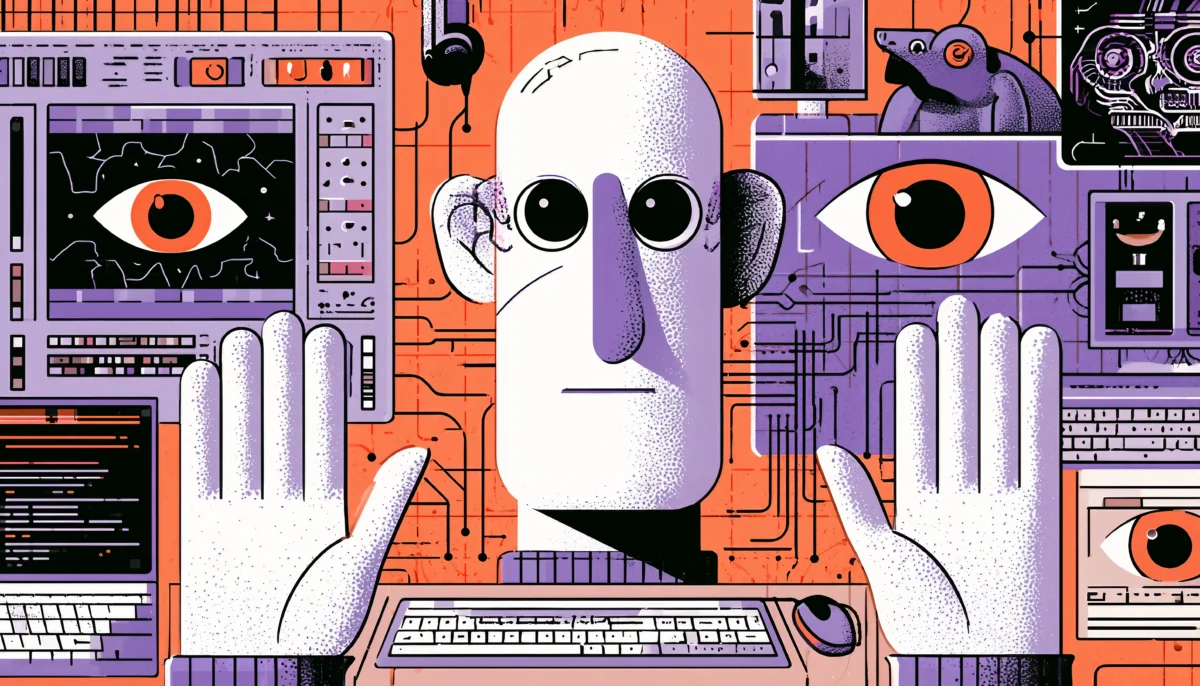
There’s a moment every designer dreads, and it cuts to the heart of ethical design. You’re reviewing session recordings and watching users navigate your AI-powered interface, and you notice something unsettling: the recommendation engine is nudging people toward choices that benefit your business metrics, not their well-being. The dark pattern isn’t intentional. It emerged from the model. And now you’re sitting there wondering, who’s responsible for the outcome?
This isn’t a hypothetical anymore. AI is no longer the futuristic layer we bolt onto products after launch; it’s woven into the core decision-making fabric of modern digital experiences. Netflix decides what you watch next. Spotify shapes your musical identity. Health apps interpret your symptoms. Financial tools recommend where your money goes. The algorithm is the UX, and that shift carries an enormous ethical weight that most product teams are only beginning to reckon with.
According to Statista, analysts project the global AI market will hit $1.8 trillion by 2030. That’s a lot of design decisions being made by machines, at scale, in real time, affecting real human lives. And here’s the uncomfortable truth: the principles that guided ethical design in the pre-AI era, clarity, user control, and informed consent, still apply, but they’re suddenly ten times harder to implement when the experience is being generated dynamically by a system nobody fully understands.
Why Ethical Design Gets Harder at AI Scale
So how do you practice ethical design when your most powerful tool is a black box? That’s exactly what we’re going to explore. Buckle up, because this one gets deep.
The Transparency Problem: When Users Don’t Know They’re Being Shaped
The Invisible Hand in the Interface
Ask yourself this question: when was the last time an app told you, clearly and upfront, that an AI was making decisions about what you see, what you’re shown first, or what you’re encouraged to do? Not buried in a terms of service document that reads like a legal dissertation, but actually told to you in plain language at the moment it mattered.
Transparency in AI-driven UX is one of the most discussed yet poorly executed principles in the field. The Nielsen Norman Group has consistently found that users have low awareness of algorithmic curation; most people assume they’re seeing an objective, chronological, or universal feed when they’re actually seeing a highly personalized, commercially optimized slice of content. Instagram’s feed algorithm, for example, deprioritizes certain types of content based on engagement signals that users never agreed to, and most users have no idea the system works this way. That’s not a bug. It’s a design choice. And it’s an ethically loaded one.
What makes the issue particularly thorny for designers is that transparency can actually conflict with engagement. Research from Cornell University indicated that when users explicitly know about recommendation systems, they often engage less with those recommendations. So there’s a perverse incentive built into the system: the more you hide the algorithm, the better your metrics look. This is the moment where ethical design has to be brave enough to accept a short-term metric hit in exchange for long-term user trust. The apps that prioritize ethical design first, those that build transparency into their core value proposition, are the ones that will survive the coming wave of AI regulation and user skepticism.
Ethical design for transparency means more than just adding a small “why am I seeing this?” button in the corner of a card. It means building explainability into the experience architecture itself. It means designing disclosure moments that are contextual, human-readable, and timely. Think about how Spotify’s “Daily Mix” quietly builds a story around your listening habits; it’s transparent in a friendly, non-threatening way. It says, “Here’s what we noticed about you.” That’s the direction. But we need to go much further, especially in high-stakes domains like healthcare, finance, and legal services where algorithmic decisions can genuinely alter the course of someone’s life.
Bias by Design: How Ethical Design Must Overcome AI’s Worst Tendencies
Training Data Is a Mirror, Not a Window
Here’s an analogy that might change how you think about AI bias. Imagine you hired a team of designers to create an interface, but every single reference they studied, every case study, every pattern library, all of it came exclusively from the 1950s. The resulting design would be functional, probably quite polished, but it would reflect the assumptions, blind spots, and cultural values of that era in ways that would be invisible to the people who made it. That’s essentially what happens when you train a machine learning model on historical data without critically examining what that data represents.
The most documented and damaging example of this is Amazon’s AI recruiting tool, which was scrapped in 2018 after it was discovered to systematically downrank résumés from women. The model had been trained on ten years of hiring data, data generated by a tech industry that had historically hired mostly men. The algorithm didn’t “decide” to discriminate. It learned to. And the UX that was built around it, the automated ranking system, and the candidate scoring interface made those biased decisions feel authoritative, objective, and final. That’s the design failure hiding inside the technical one.
For UX designers, the challenge is that bias often lives several layers beneath the interface. You’re designing the front end of a system whose back end you may not fully control or even completely understand. But that’s not an excuse for disengagement. There are concrete design interventions you can make. You can design for human override, making it clear to users and operators that algorithmic outputs are suggestions, not verdicts, and building easy pathways to challenge or bypass them. You can design for diversity in the testing phase by running usability studies across different demographic groups and treating differential outcomes as a warning sign, not an edge case. Google’s PAIR (People + AI Research) team has published an entire guidebook of responsible AI design patterns specifically for this purpose, and it’s required reading for anyone working in this space.
Bias also manifests in more subtle ways through what we might call “experience gaps.” These are the moments where the AI works beautifully for one type of user and fails quietly for another, serving up relevant recommendations for a 28-year-old urban professional while missing the mark entirely for a rural elderly user, a non-native language speaker, or someone with a disability. Voice interfaces trained primarily on American English accents routinely misunderstand Scottish, Indian, or Nigerian English speakers. The bias isn’t malicious. But the gap in experience is real, consequential, and entirely preventable with more diverse training data and more inclusive UX research practices.
Autonomy vs. Personalization: The Consent Paradox at the Heart of AI UX
Personalization Is a Gift With Strings Attached
We love personalization when it works. When Spotify creates a Discover Weekly playlist that somehow perfectly captures your mood on a Tuesday morning, it feels almost magical. When Amazon recommends the exact book you didn’t know you needed, it feels like the system knows you. But that feeling of being known comes at a price, and most users have never meaningfully agreed to pay it. They clicked “accept” on a cookie banner they didn’t read and moved on. That’s not consent. That’s capitulation.
The tension between autonomy and personalization is one of the most significant ethical divides in AI-driven UX. On one side, you have genuine user benefit, more relevant content, reduced cognitive load, and faster paths to value. On the other side, you have a subtle but serious erosion of user agency. When an algorithm curates your information environment, it narrows your exposure to ideas, products, and perspectives that don’t fit your established profile. Eli Pariser called this effect the “filter bubble” back in 2011, and if anything the phenomenon has intensified as recommendation systems have become more sophisticated. TikTok’s For You page is arguably the most powerful personalization engine ever built, and multiple studies, including internal research leaked from the company, suggest it can drive users toward increasingly extreme content by optimizing for watch time above all else.
Building Ethical Design Into Personalization Systems
The design challenge here is finding ways to give users genuine, meaningful control over their AI-driven experience without making that control so complex that nobody uses it. YouTube’s “not interested” and “don’t recommend this channel” buttons are a step in the right direction, but they’re buried, reactive, and largely ineffective at course-correcting aggressive recommendation patterns. What would proactive consent look like? What if onboarding experiences let users genuinely shape the values of their recommendation engine, not just their interests but also their boundaries? “Show me diverse perspectives, even uncomfortable ones.” “Limit content that makes me feel anxious.” “Prioritize long-form over short-form.” These aren’t technically impossible features. They’re design decisions that haven’t been prioritized because they might reduce session time. That’s the ethical choice every product team is quietly making every single day.
Accountability and Ethical Design in the Age of Algorithmic Decision-Making
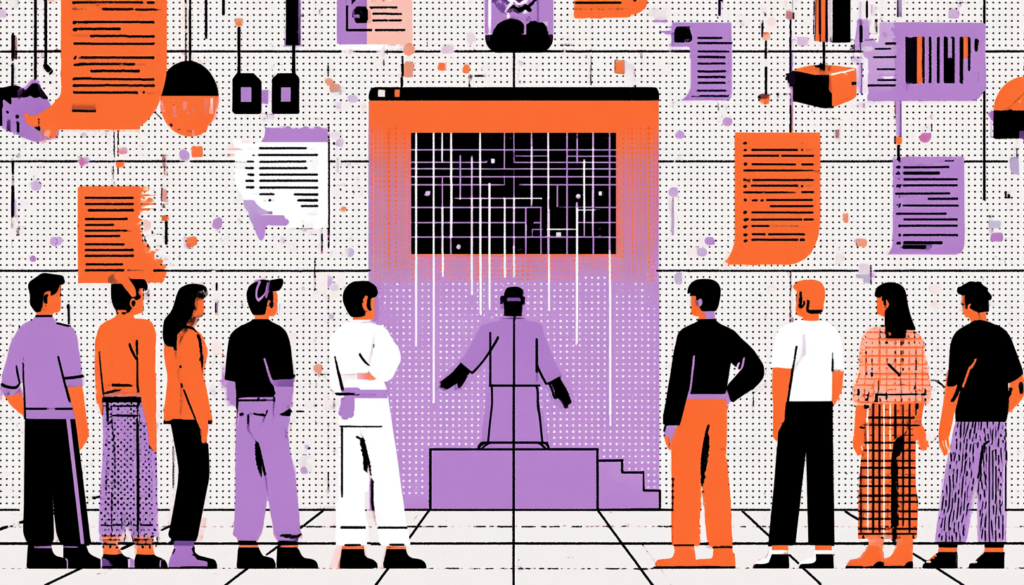
Who Answers When the Algorithm Gets It Wrong?
When a doctor misdiagnoses a patient, there’s a clear accountability structure. When a bank manager makes a discriminatory lending decision, there are laws and processes designed to address it. But when an AI system in a healthcare app sends a user dangerously incorrect symptom information, or when a credit scoring algorithm denies someone a loan based on their ZIP code, the accountability chain suddenly becomes murky to the point of invisibility. The engineer says it’s a data problem. The data scientist says it’s a model problem. The product manager says it’s an edge case. The designer says it was out of their scope. And the real harm leaves the user with no recourse.
This accountability gap is one of the most urgent ethical challenges in AI-driven product design. The EU’s AI Act, which came into force in 2024, represents the most comprehensive attempt yet to create legal accountability structures for AI systems, classifying AI applications by risk level and imposing requirements for transparency, human oversight, and redress mechanisms, particularly for high-risk categories like healthcare, employment, and credit. If you’re designing any AI-driven product in these categories, this regulation should be sitting on your desk alongside your design system. It’s not just a compliance framework; it’s a surprisingly useful ethical checklist.
But regulation alone doesn’t solve the design problem. Accountability needs to be built into the experience itself. This means designing clear feedback mechanisms that let users report when an AI-driven decision seems wrong. It means creating visible escalation paths to human review. It means never designing AI output in a way that makes it look more authoritative or certain than it actually is, which is a deeply common UX pattern, by the way. Think about how many health apps present AI-generated insights with the same visual weight and confidence as medically reviewed information. That design choice carries ethical consequences. The visual language of certainty, bold typography, confident phrasing, and authoritative color schemes can override a user’s natural skepticism in ways that genuinely put them at risk.
There’s also a team-level accountability dimension here. Ethical AI design requires cross-functional ownership. Designers need to be in conversations about model training, data governance, and output evaluation, not just handed a spec sheet that says “show AI recommendations here.” Equally, engineers and data scientists should expose themselves to the human impact of their technical decisions through user research and design critique. The companies doing this well, organizations like Salesforce with its ethical AI team or Microsoft with its responsible AI principles, have built structures that make ethics a shared organizational value rather than a checkbox on the designer’s to-do list. That cultural shift is ultimately the most important design intervention of all.
Designing With a Conscience
The conversation around AI ethics in UX isn’t going to resolve itself neatly. There’s no definitive framework that makes every decision easy, no single pattern library that covers every ethical edge case. What there is, though, is a growing community of designers, researchers, and product leaders who understand that the choices we make in how we design AI-driven experiences are fundamentally moral choices, not just aesthetic or commercial ones. When you decide how transparent to be about an algorithm, you’re making a choice about human dignity. When you ship a product without auditing it for bias, you’re making a choice about whose experience matters. When you design a personalization system without meaningful consent mechanisms, you’re making a choice about autonomy. These choices accumulate. They shape societies, influence elections, affect mental health, and determine who gets access to opportunity. The best AI-driven UX doesn’t just work well; it treats the humans it serves as whole, complex, autonomous people rather than behavioral data points to be optimized. That’s the standard we should hold ourselves to in every sprint, every release, and every design review. The algorithm will only be as ethical as the designers who shape the experience around it. That’s us. It’s always been us.